
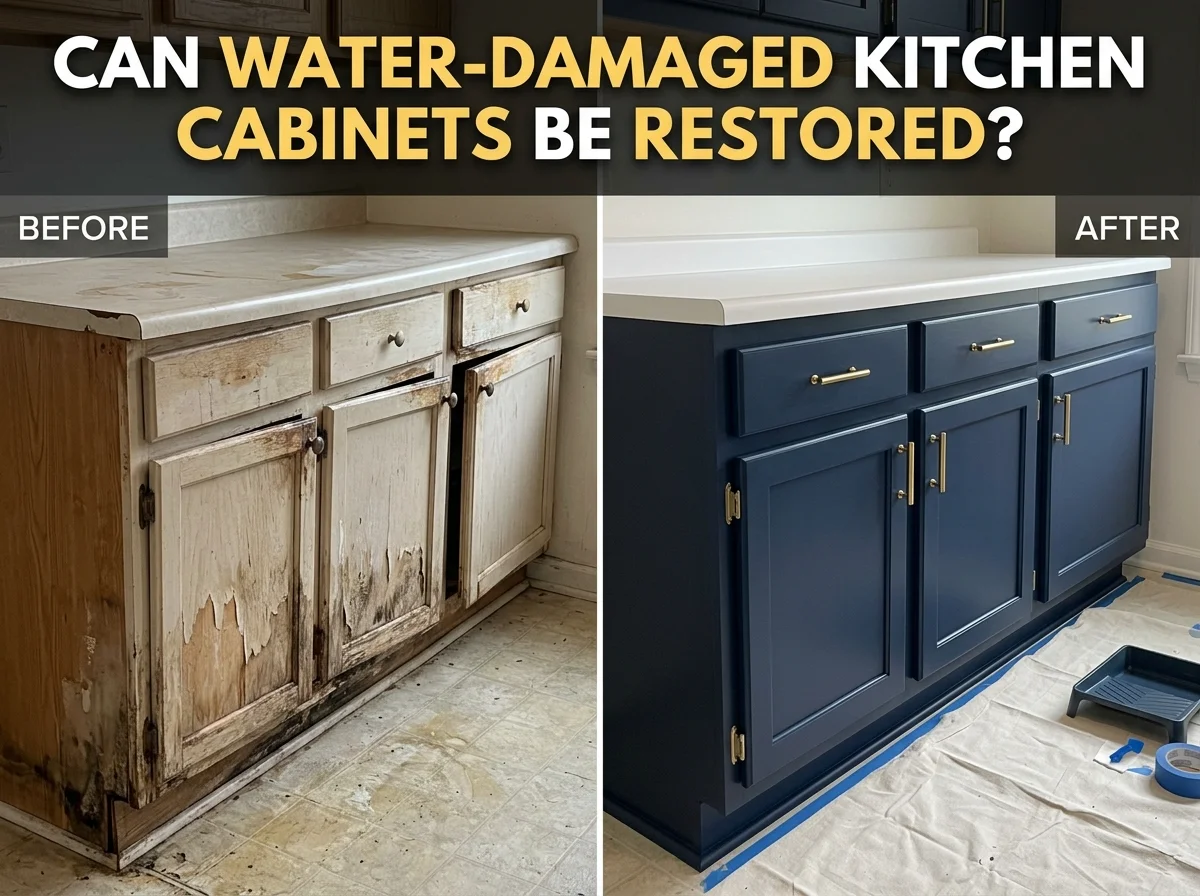
The door under the kitchen sink has started to stick. Its bottom edge looks thicker than the rest; the paint is lifting, and the cabinet floor has darkened. With water-damaged kitchen cabinets, the answer is usually mixed. Limited damage in sound material can often be repaired. Soft, crumbling, or badly warped parts usually cannot. What decides it is how long the material stayed wet, how the cabinet was built, and whether it ever dried all the way through after the leak was stopped.
Signs That Your Kitchen Cabinets Have Water Damage
Moisture leaves different marks depending on the material and how long it stayed wet. Here are the signs to check.
Swelling, Warping, and Soft Wood
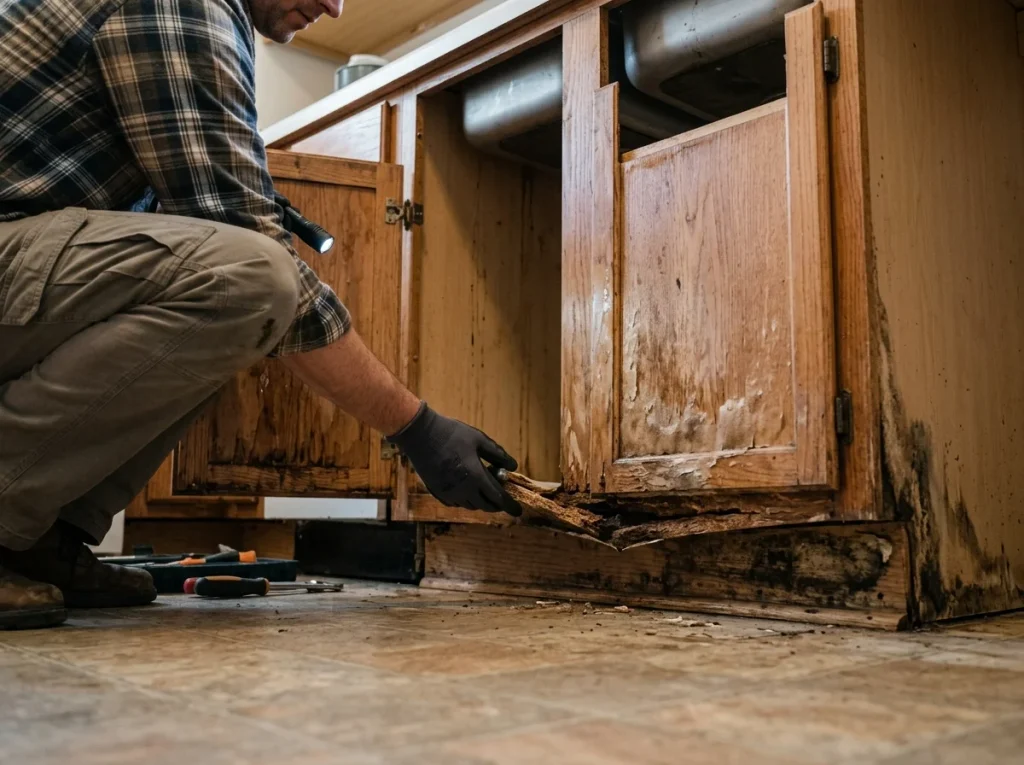
Water enters wood and wood-based panels through cut edges and gaps in the finish, which is why the lowest part of a cabinet tends to suffer first. The fibers expand as they soak. A door edge may thicken, a shelf may sag, or a panel may bow away from its frame. A light touch can offer clues. Firm material is a good sign, while a spongy or crumbling spot suggests the fibers have broken down. Touch and sight cannot rule out hidden moisture or structural damage, though.
Water Stains, Peeling Finish, and Mold
Dark rings and bubbled paint all show that moisture reached the finish or got behind it. A musty smell deserves attention, since mildew or mold growth can start out of sight, on the back of a panel or under a shelf liner. Still, a stain mostly records where water has been. A discolored board that stays hard and flat may need only surface work, so do not write off a cabinet on color alone.
Can Water-Damaged Kitchen Cabinets Be Repaired?
Sometimes they can. What matters most is whether the material is still strong, so appearance alone should not determine it.
Damage That May Be Repairable
A stained shelf, a peeling cabinet door, or moisture near a joint may be repairable if the material remains firm and holds its original shape. Light swelling may ease as the water leaves, though it may not shrink all the way back. How far it recovers depends on the material and how long it stayed wet. If the damage affects the door’s structure or appearance, Cabinet Door Replacement may be a practical option. Expect an uneven result instead of a guarantee.
Damage That May Require Replacement
Think about what a cabinet has to do. It holds weight, keeps its joints tight, and carries hinges. Ballooned particleboard, panels that crumble, joints that wobble, and doors twisted out of shape struggle with all of that. The same applies to parts where screws no longer hold firmly. A cabinet can look worse than it is or better, so do not judge by looks alone, and remember that a hands-on check cannot reveal everything.
How Does Water-Damaged Cabinet Restoration Work?
Repair follows a proper order, and skipping a step can undo the work. Not every cabinet will need every stage. Effective Cabinet Restoration starts with identifying the source of moisture, allowing the affected material to dry, and assessing which parts can be repaired or need replacement.
Stop the Leak and Dry the Affected Area
Repair work that starts before the leak is fixed is wasted effort. Trace the water to its source, whether that is a loose drain fitting, a dripping supply line, or a dishwasher seal. Then give the cabinet time to dry. The outside may feel dry even when moisture remains trapped in the joints, behind the rear panel, or beneath the cabinet base. Trapped moisture is what brings stains and mildew back after a repair looks finished.
Repair the Damaged Material
With the cabinet dry, a flaking finish can be removed so the true condition of the material shows. Minor damage can then be fixed. Wet or crumbling material is different. Sanding or filling it can trap moisture and hide a failing panel. Drying alone may also not rescue a swollen particleboard panel, because its compressed particles often do not pack back together. Those pieces are usually better replaced.
Restore the Finish and Check the Hardware
Refinishing comes last, once repairs are done and the material is stable. Before the finish goes on, check the hinges and screws. Damp wood can strip screw holes, and moisture can rust metal fittings, so a door that hangs crooked may have more behind it than a warped panel.
A fresh finish changes how the cabinet looks. It does nothing for hidden moisture, and it cannot restore strength that is already gone.
How Does Cabinet Material Affect Water Damage Repair?
Water does not affect every cabinet material the same way. Here is how each type tends to respond to moisture.
Solid Wood and Plywood Cabinets
Solid wood can swell and warp when it gets wet. Whether it recovers depends on how much water it took in, how long it stayed wet, and whether the fibers were damaged. A board exposed to a small amount of moisture may still be repaired, whereas repeated or extended water exposure can permanently change its shape. Plywood is made from thin layers glued together. Prolonged moisture can weaken that glue, and the layers may then separate or ripple. Neither material is a safe bet in every case.
Particleboard and Wood Veneer Cabinets
Particleboard is pressed wood particles bound with resin. Long exposure can make it swell, crumble, and lose its hold on screws. Wood veneer is made by bonding a thin layer of natural wood to another material. When moisture weakens that glue, the surface bubbles or lifts at the edges. Either one may survive a minor incident, but heavy or repeated wetting changes the picture. Condition matters more than the label.
When Should You Replace Water-Damaged Kitchen Cabinets?
Replacement is practical when a repair would not last. Cabinet boxes that have lost strength, panels still badly warped after drying, and material that crumbles or cannot hold fasteners all fall into that group. Dampness that keeps returning, or a suspected mold problem, calls for a professional assessment, because moisture hidden inside a cabinet is hard to judge by eye.
That does not always mean tearing out the kitchen. Depending on construction and how far the damage spread, a door, a panel, or a single cabinet section may be replaced while the rest stays. The real test is function: whether the piece stays stable and remains dry.
How Can You Prevent Future Kitchen Cabinet Water Damage?
Small leaks do most of the harm, mainly because they go unnoticed. A few regular checks help:
- Look under the sink for drips or damp spots on supply lines and drain fittings.
- Check cabinet edges beside the dishwasher for moisture.
- Wipe up spills before they reach seams and edges.
- Follow up on musty smells or damp spots that return.
- After a plumbing repair, confirm the area stays dry.
Frequently Asked Questions
Can swollen kitchen cabinets return to their original shape?
Slight swelling may ease as moisture leaves the material, though not always completely. Severe swelling, or damage to the material’s internal structure, can be permanent, especially in particleboard.
Can you repair water-damaged cabinet doors?
Sometimes. It depends on how much the door has warped or swollen, whether veneer has separated, and whether the material underneath is still sound. A door that is firm and flat has better odds.
Should you paint cabinets to cover water damage?
Paint can hide discoloration, but it cannot fix swollen material, trapped moisture, or a weakened structure. Resolve the moisture problem and let the cabinet dry before any refinishing.
Final Thoughts
When the material is still intact and the cause of the moisture has been eliminated, water-damaged kitchen cabinets can usually be salvaged. When there is extensive swelling or deterioration, replacement is likely in most cases.
Kitchen Redux, located in the Boston area, provides homeowners with cabinet restoration, painting, refacing, door replacement, and full cabinet replacement services in Boston and surrounding Massachusetts communities.
To determine what works for you, dial Kitchen Redux at (774) 773-8387 to schedule a free in-home consultation.