
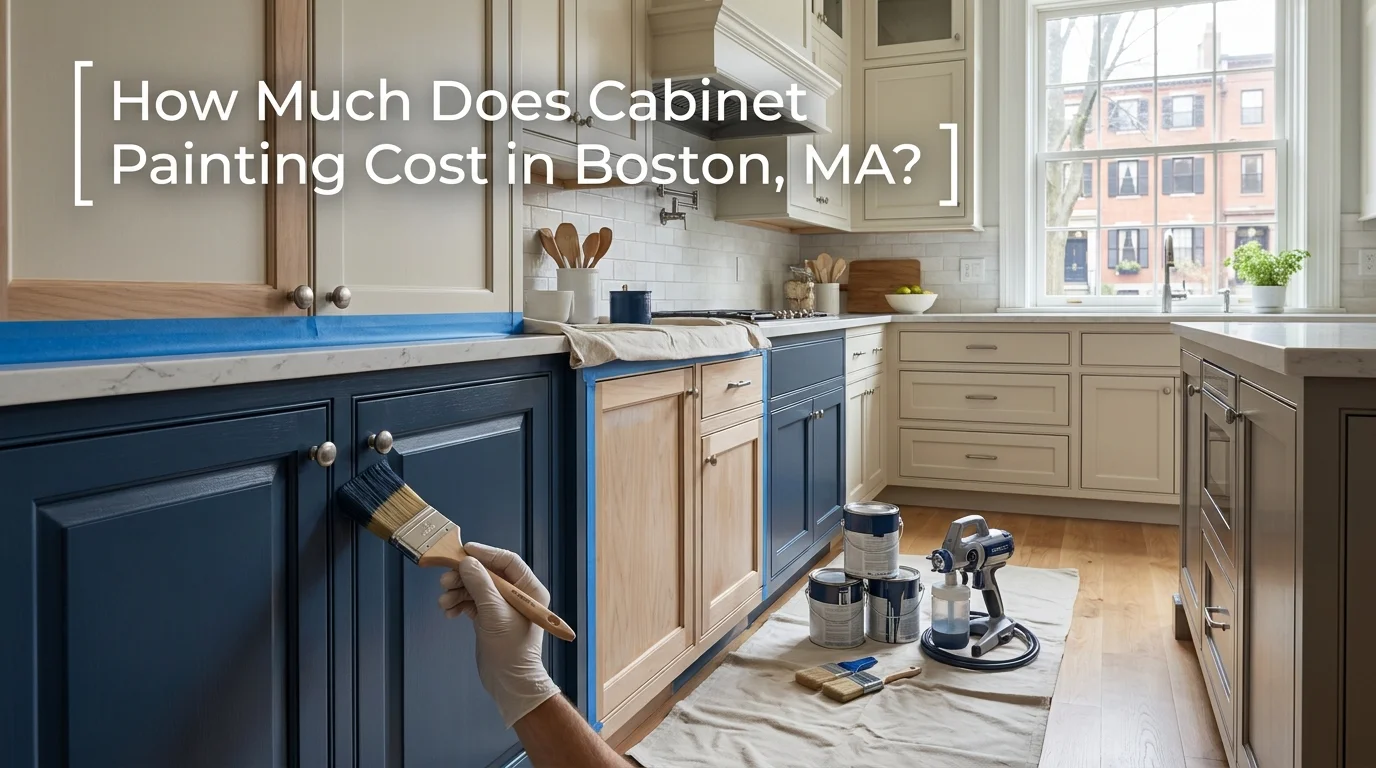
Ask five people what cabinet painting costs in Boston, MA, and you’ll get five different answers, because the honest answer depends on the kitchen. A one-wall galley kitchen with a dozen doors is a different job than a large open kitchen with forty pieces to prep and coat. The number one thing homeowners need to hear before they even ask about pricing is this: size, material, and existing condition are what set the final price, not a flat rate you can pull off a chart. This guide breaks down exactly why.
Average Cabinet Painting Cost in Boston, MA
So, what’s the real number? For a standard kitchen in the Greater Boston area, professional cabinet painting costs $3,000 to $6,500. Smaller galley kitchens can start around $1,500 to $2,500, while large open-concept kitchens can reach $7,000 or more.
Kitchen size plays a role, but the number of cabinet doors and drawer fronts usually has a bigger impact on the price. Most local Boston contractors charge $80 to $130 per door or drawer front. Each piece needs to be cleaned, primed, and spray-finished, so the prep work adds up quickly. Paint and material costs stay fairly consistent, but higher regional labor rates and the extra prep needed for historic or older New England homes can push the total higher.
There are also two common ways cabinet painting is priced locally: per piece (per door or drawer) and per linear foot (typically $40 to $80 per linear foot). Still, every kitchen is different, and the condition of the cabinets can change the final price. A walkthrough of the actual kitchen is much more useful than relying on an online estimator.
What’s Included in a Professional Cabinet Painting Quote in Boston
Not every cabinet painting estimate Boston homeowners get covers the same ground, and that’s worth knowing before you compare two quotes side by side. A proper one accounts for labor on the full prep process, the primer being used, the actual cabinet-grade paint or coating, and whether doors and drawer fronts come off the hinges to be sprayed elsewhere or get painted in place. Some contractors fold in minor repairs and hardware reinstallation too. When a cabinet painting quote from a Boston contractor looks unusually cheap, it’s worth asking what got left out. Nine times out of ten, it’s the prep work, and that’s the part of the job that determines whether your cabinets look good for one year or ten.
Key Factors That Affect Cabinet Painting Cost in Boston
There’s no single line item that decides what a cabinet job costs. It’s a combination of size, material, condition, and the method used to apply the paint, and each of those pulls the number in a different direction.
Kitchen Size and Cabinet Count
The bigger the kitchen, the more surface area there is to sand, prime, and coat, which is fairly intuitive. What catches people off guard is that cabinet count often matters more than square footage. A narrow galley kitchen packed with cabinets can involve more actual pieces than a wide, open kitchen with fewer, larger units, and more pieces means more hours on site.
Number of Doors, Drawer Fronts, and Cabinet Boxes
Most contractors price closer to how many doors and drawer fronts they’re working with than the kitchen’s overall footprint. Every single one gets sanded, primed, and finished on its own, whether it’s removed for spraying or masked in place. A kitchen full of small drawers can end up pricier than expected simply because there are so many individual pieces to handle.
Cabinet Material and Current Condition
Wood, MDF, laminate, and thermofoil don’t accept paint the same way. Solid wood generally holds a finish well once it’s properly prepped. Laminate and thermofoil are a different story and usually need a bonding primer made for slick, non-porous surfaces, or the paint won’t stick long-term. Condition plays into this too. Cabinets with peeling finish, water damage, or loose joints need repair before any paint goes on, and repair time gets added straight onto the total.
Surface Preparation, Sanding, and Priming
If there’s one stage that drives labor hours more than any other, it’s this one. Degreasing years of cooking residue off the surface, sanding down whatever finish is already there, and applying a primer suited to the material takes real time, usually more time than the painting itself. Skip a step here, and the paint won’t bond properly, no matter how good the topcoat is. Most of the cost in a quality cabinet job is really the cost of proper prep.
Paint Type and Finish Quality
Regular wall paint isn’t built to handle cabinets that get opened and closed dozens of times a day. Cabinet-grade coatings are formulated for that kind of wear, which is part of why they cost more than standard paint. Finishing choice matters too. Satin and semi-gloss finishes hold up better under daily use than matte, though they also tend to show any imperfections in the prep work more clearly, which sometimes means extra sanding before the coat goes on.
Painting Method: Spray Finish vs. Brush and Roll
A sprayed finish gives you that smooth, factory-style look, but it takes more setup, usually a dedicated spray area or booth, plus time spent masking off the rest of the kitchen so overspray doesn’t land on your countertops or floors. Brushing and rolling can work fine for smaller touch-up jobs, but it rarely matches the even coverage a sprayer produces on doors and drawer fronts. Ask your contractor which method they’re planning and why, since it affects both the price and how the finished cabinets will actually look.
Hardware, Cabinet Interiors, and Minor Repairs
While the doors are already off for painting, it’s a good time to swap out old hinges or pulls for new hardware, since you’re not paying for a separate trip later. Painting the interiors of the cabinet boxes, fixing a sticking hinge, or patching a chipped edge are common add-ons that can move your total up or down depending on what your particular kitchen needs.
Color Change and Labor Costs in Boston
Jumping from a dark stain to white, or the other direction, usually takes an extra coat or two to fully block out the old color so nothing bleeds through. More coats mean more material and more time on the job. Labor costs in the Boston area also tend to reflect the region’s cost of living and the demand for skilled painters, which is something to keep in mind when you’re comparing a local quote against one from farther out.
Cabinet Painting Cost Per Linear Foot vs. Per Cabinet or Door
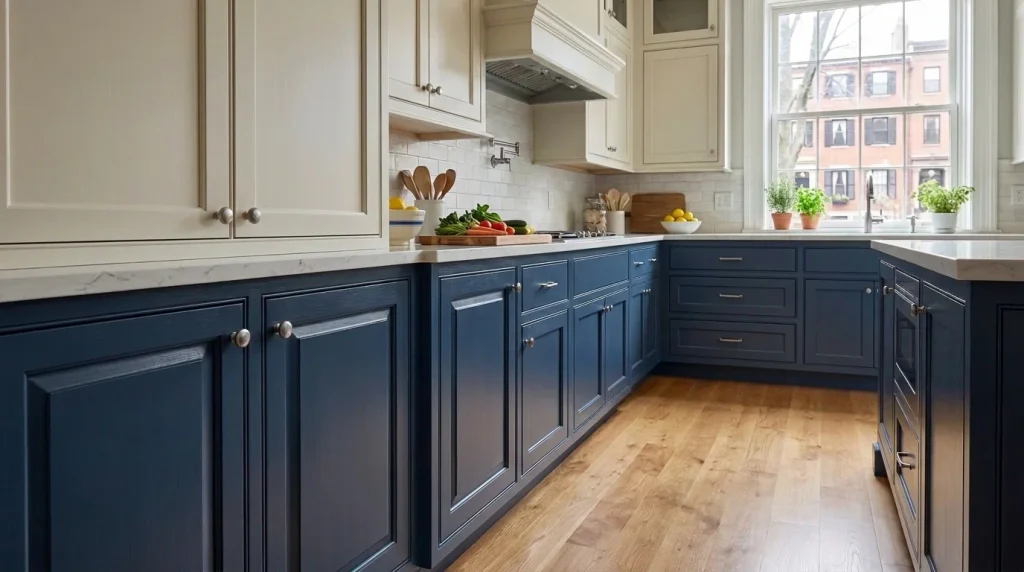
Two pricing models come up most often: cabinet painting cost per linear foot or a rate based on individual doors and drawers. Linear foot pricing measures the total run of cabinetry along your walls, typically running $40 to $80 per linear foot in the Greater Boston area. This approach tends to work well for kitchens with a fairly consistent, uniform layout.
Per-door and per-drawer pricing usually runs $80 to $130 per piece locally and looks at the actual piece count instead. This method can give a more accurate picture when a kitchen has a lot of small drawers or an unusual cabinet configuration that doesn’t fit neatly into a linear measurement.
Neither approach is automatically better than the other. What matters is whether the pricing method fits your kitchen’s layout. A contractor who knows what they’re doing should be able to explain why they’re pricing your job one way over the other.
Cabinet Painting vs. Refinishing vs. Replacing: What’s the Cost Difference?
Cabinet Painting & Refinishing ($3,000 to $6,500): Painting or refinishing is usually the most affordable option when the existing cabinets are still in good shape. Refinishing means removing the old finish and putting on a new stain or clear coat. Painting is a better fit when the goal is to give the cabinets a different color without replacing the cabinet boxes.
Cabinet Refacing ($5,000 to $12,000): Refacing keeps the existing cabinet frames but replaces the outer doors and side veneers. It gives the kitchen a new look without removing the cabinet system. The tradeoff is the price, which runs roughly two to three times as much as painting for the same kitchen layout.
Full Cabinet Replacement ($12,000 to $45,000+): Full replacement means removing the existing cabinets and installing new cabinet boxes and hardware. In Greater Boston, higher trade labor rates can make this the most expensive option by a wide margin. Costs can go even higher when electrical or plumbing work is also required.
When comparing kitchen cabinet refinishing costs in Boston with painting or full replacement, the choice usually comes down to the condition of the cabinets and what needs to change. Painting works well when the cabinet boxes are still in good shape, and the main goal is a new color. Refacing changes the exterior, while replacement makes more sense when the kitchen needs a different layout or new structure.
How to Get an Accurate Cabinet Painting Estimate in Boston
An online calculator can’t see what’s actually going on inside your kitchen, and that’s exactly why those numbers rarely hold up. Before requesting a quote, it helps to have a rough cabinet count, some photos of the current finish and any visible damage, and the cabinet material if you happen to know it.
Greater Boston adds its own layer to this. A lot of the housing stock here, from older triple-deckers to brownstones to condo units, comes with tighter kitchen layouts or non-standard cabinet boxes that can affect both access and how long prep takes. That’s a big part of why an in-person visit, or at minimum a detailed photo-based walkthrough, gives you a far more dependable number than a generic online form.
A professional cabinet painting cost Boston contractors can actually stand behind comes from looking at your specific cabinets, not estimating off square footage alone. And if affordable cabinet painting in Boston is the priority for your project, saying so upfront during that walkthrough helps a contractor point out where you can save money without cutting corners on the prep that actually matters.
Frequently Asked Questions
How long does cabinet painting typically take?
Most projects run somewhere between a few days and about two weeks, depending on the size of the kitchen and how many coats the job calls for. Prep and any repair work usually take longer than the painting itself, and you have to factor in dry time between coats.
Do I need to empty my cabinets before painting?
Yes, and it makes a real difference. Clearing out cabinets and drawers gives the painter full access to every surface and keeps your dishes and cookware safe from dust or overspray. It also speeds things along, since nobody has to work around your belongings while prepping and painting.
Can all cabinet materials be painted?
Most can, including solid wood, MDF, and a lot of laminate or thermofoil surfaces, but each one calls for a different approach. Laminate and thermofoil especially need a bonding primer made for slick surfaces, since a standard primer won’t grip on its own.
How long does a professional cabinet paint job last?
With proper prep and cabinet-grade paint, a professional finish should hold up well for years of regular use. How long it actually lasts comes down to the quality of that prep work and the coating used, which is exactly why skipping steps to save time tends to shorten how long the job holds up.
Is cabinet painting messy or disruptive to daily kitchen use?
There’s some disruption, since doors and drawers usually come off and the kitchen becomes harder to use fully while the work is happening. A professional team should contain dust and overspray with proper masking or handle doors in an off-site spray setup so the mess stays confined to the work area instead of spreading through the rest of your home.
Get an Accurate Quote for Your Kitchen
No two kitchens cost the same to paint, and the only real way to know your number is to have someone look at your actual cabinets. Kitchen Redux works with kitchens across Boston and the surrounding towns, and we’re happy to walk through your space, talk about the options that make sense for your budget, and put together a quote based on what your project needs. Reach out, and we’ll get you a straight answer