
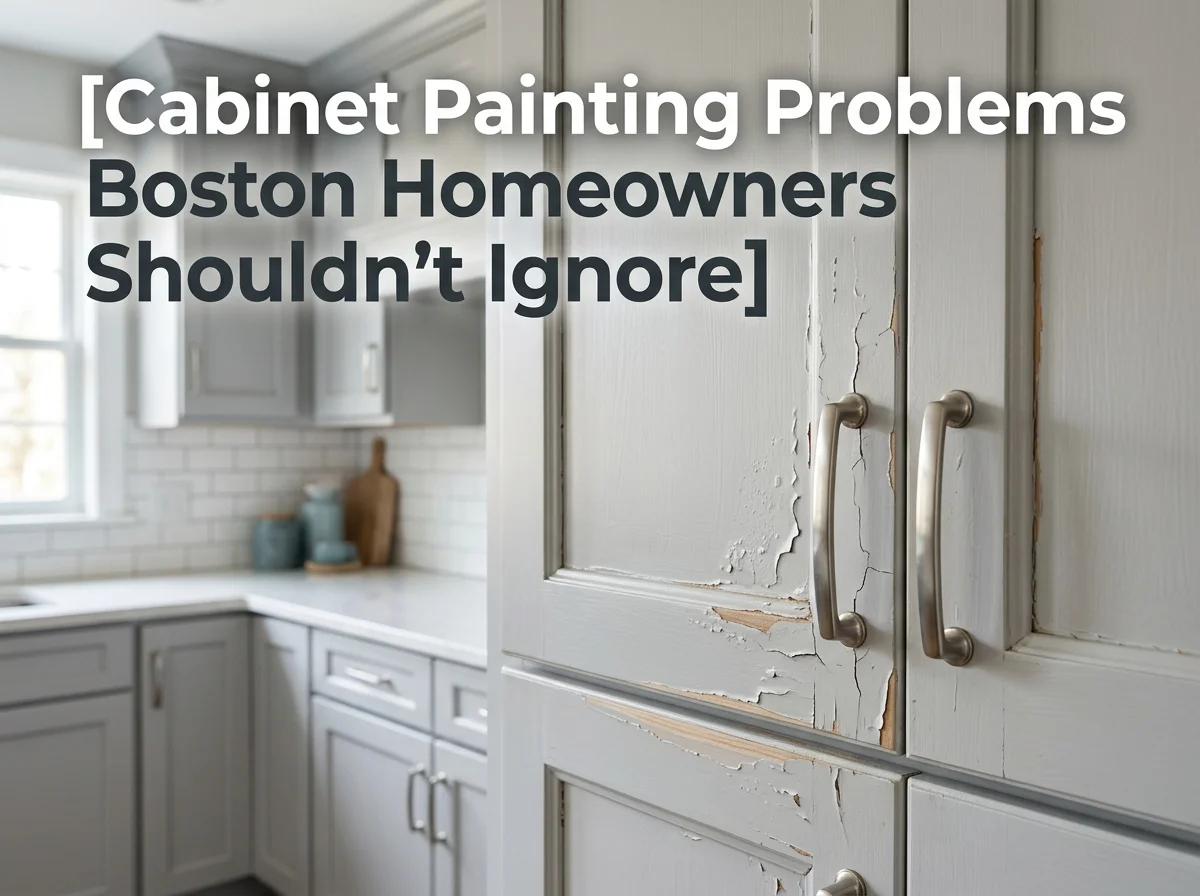
Peeling edges, chipped corners, cracked joints, and bubbles under the finish. If your kitchen cabinets are showing any of these signs, you’re not alone. Cabinet painting problems turn up in kitchens across the region, and not every mark means something serious. Some wear is simply part of daily use. Other signs can point to poor preparation, trapped moisture, or a finish that’s starting to fail.
Boston’s seasonal changes can add to the problem. Humid summers and dry indoor heat in winter can affect painted wood, especially around sinks and stoves. Here’s what actually causes these problems and when it’s time to call in a professional.
Kitchen Cabinet Painting Problems That Need Attention
Most kitchen cabinet painting problems fall into a few recognizable categories. Knowing what each one looks like makes it much easier to decide what to do about it.
Peeling or lifting paint
Peeling usually starts at an edge or a seam where a door meets its frame, then spreads as the loose section catches on things. A small peel near a hinge is likely to just need a touch-up. Peeling across several doors or drawer fronts almost always points to an adhesion problem underneath.
Chips around handles and edges
Handles and edges take the most contact in a kitchen, so paint wears thin there first. A chip here and there after years of use is normal. Chipping that keeps returning to the same spots or shows up where cabinets barely get touched usually means the paint never bonded properly.
Cracks along panels and joints
Wood cabinets expand and contract with temperature and humidity, and the paint has to move along with them. Fine hairline cracks along a panel edge are often just the finish responding to that movement. Deeper cracks running across a whole door, or cracks that follow the wood grain, suggest the wood underneath is shifting more than the coating can handle.
Bubbling or blistering
Bubbles under cabinet paint almost always mean something got trapped beneath the surface, whether that’s moisture, heat, or how the paint was applied. Sanding down a visible bubble hides it for a while, but if the cause underneath is still there, it tends to come back. Kitchens with steady steam exposure near the stove or dishwasher see this most.
Uneven color or sheen
Cabinets that look patchy, or where some doors have a different sheen than others, usually didn’t get the same preparation before painting. Brush marks on one door next to a smoother finish on the next are a sign the job wasn’t done uniformly. It’s more cosmetic than structural, but it’s the first clue that shortcuts were taken somewhere.
What Causes These Cabinet Finish Problems?
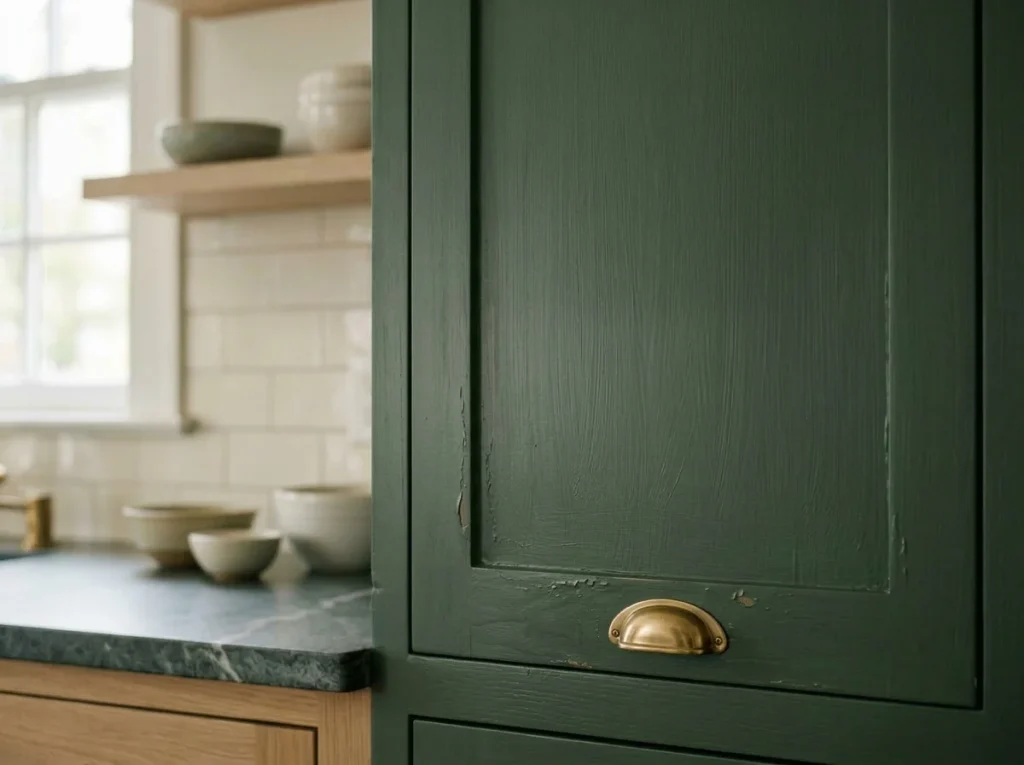
The damage you see on the surface usually started before the final coat ever went on. Cabinet finish problems trace back to something that happened, or didn’t happen, during preparation.
Grease and residue left on the surface
Cooking releases fine airborne grease that settles on cabinets over time, especially near the stove. A quick wipe removes dust but leaves an invisible oily film behind. Paint applied over that residue can look fine at first, then start lifting weeks or months later because it never actually bonded to the wood.
Skipping or rushing surface preparation
Cabinets need to be sanded enough to give new paint something to grip. Rushing this step leaves the surface too smooth for real adhesion, and different materials complicate things further. Wooden cabinets need different handling than MDF, and a previously painted surface needs different prep than bare wood.
Using the wrong primer or coating
Primer bridges the gap between the existing surface and the new paint, and the right choice depends on both material and condition. A primer built for drywall or trim won’t hold up on cabinet doors that open and close hundreds of times a year the way a cabinet-specific product will, especially if you’re planning a cabinet replacement rather than just a fresh coat of paint
Moisture and kitchen humidity
Kitchens generate more moisture than almost any other room, between boiling water, running dishwashers, and steam from the stove. That moisture settles on nearby cabinet surfaces. Boston’s seasonal humidity swings and dry indoor heat add another layer, since painted wood is constantly adjusting rather than staying stable year-round.
Applying paint before the previous coat is ready
Paint can feel dry to the touch long before it’s actually cured, and curing can take days. Adding another coat too soon traps solvents underneath and weakens the whole finish. Doors put back into heavy use before curing finishes tend to show wear earlier than they should.
Cabinet Painting Mistakes That Can Lead to Early Failure
Cabinet paint failure usually comes down to a handful of avoidable mistakes on DIY projects or rushed repaints. Painting over grease or residue is one of the most common. Skipping primer on a glossy surface that clearly needs it, using paint that isn’t rated for cabinetry, applying it too thick, or rushing between coats all weaken the final result in similar ways.
Putting doors back into daily use before the finish has cured is another frequent misstep, along with ignoring proper ventilation and moisture control during the project. It’s also easy to assume every material can be prepped the same way when oak, MDF, and previously finished wood each call for their own approach. A good finish depends on everything that happens before the last coat goes on, not just the paint itself.
How to Tell If Cabinet Paint Is Failing or Just Showing Normal Wear
Not every mark on a cabinet means the paint job failed. What matters is how widespread the problem is.
A door or two with a small chip near the handle, some light scuffing, or a faint scratch from a dropped pan is normal wear. It stays limited to a small area and usually fixes with a simple touch-up. Peeling across several doors that keeps coming back and spreading cracks, or paint that feels soft or tacky, are different things. So are swollen sections, doors that no longer close right, or a finish visibly separating from the wood. The spread of the damage matters more than any single imperfection.
Why Cabinet Paint May Not Stick After Repainting
It’s frustrating to repaint cabinets and watch the same peeling or chipping return. Cabinet paint not sticking almost always comes back to adhesion, and adhesion depends entirely on what the paint is bonding to.
Dirty surfaces from grease or cleaning residue prevent a solid bond no matter how many coats go on. Glossy finishes that weren’t sanded properly cause the same issue, along with the wrong primer, incompatible coating layers, and moisture present during application. Applying another coat over a surface that’s already failing usually just delays the same outcome, since the fresh layer takes over whatever weakness was already there.
Can Damaged Painted Cabinets Be Repaired or Do They Need Repainting?
Whether damaged painted cabinets need a small fix or a full repaint depends on how much of the kitchen is affected and what’s causing it.
When a small repair may be enough
A single scratch or damage confined to one small area can usually be touched up without repainting the whole kitchen, since the surrounding paint is still sound.
When repainting makes more sense
Problems across several doors, peeling in more than one area, and an uneven finish throughout the kitchen are signs that spot repairs won’t hold. A full repaint gives the kitchen a uniform finish instead of a patchwork of fixes.
When the underlying cabinet may need attention
Swelling or moisture damage in the wood goes beyond what paint can fix on its own. If the material underneath is compromised, repainting over it is only a temporary cover. The visible paint problem doesn’t always tell the full story.
What Professional Cabinet Painting Does Differently
Professional cabinet painting isn’t just about using nicer paint. The difference shows up at every stage, starting well before the first coat goes on.
A professional job starts with thorough cleaning that actually removes grease and buildup, with attention around the stove and handles where residue collects most. Preparation is matched to the material, since oak, MDF, and previously painted surfaces respond differently to sanding and priming. Primer and topcoat selection focuses on bonding and durability rather than whatever’s on hand, and application happens under controlled conditions, with proper time between coats and before doors go back into use.
When Boston Homeowners Should Bring in a Cabinet Painting Professional
Some cabinet problems are manageable on your own. Others are a sign to bring in someone who does this work regularly. If paint is failing across multiple doors, if a repaint has already started showing the same problems, or if the surface needs thorough preparation before new paint will hold, professional help makes sense. The same goes for moisture damage, an uncertain cause behind the failure, or a kitchen where every door and drawer needs to match rather than look patched together.
Kitchen Redux provides cabinet painting for homeowners in the Boston area and handles the process from preparation through the finished coating. If you’re trying to figure out whether your cabinets need a touch-up or a full repaint, give us a call and book your services.
Frequently Asked Questions About Cabinet Painting Problems
What is the most common reason cabinet paint starts peeling?
Peeling usually traces back to poor adhesion, often from grease left on the cabinets before painting, an existing glossy finish that wasn’t sanded enough, or the wrong primer for the material.
Can peeling paint on kitchen cabinets be touched up?
A small area can be sanded and repainted on its own. Peeling across several doors, or peeling that keeps returning, usually needs more thorough preparation than a touch-up.
Why is my cabinet paint bubbling after painting?
Bubbling generally means moisture, heat, or trapped air got under the coating. Kitchens near stoves see more of this because of regular steam exposure.
Why does cabinet paint crack after a few months?
Cracking often comes from wood movement combined with a coating that isn’t flexible enough to keep up. Incompatible paint layers and shifting indoor humidity can all speed this up.
How can I tell if my cabinets need repainting instead of a touch-up?
Look at how many areas are affected. A touch-up works for one or two small spots. Damage across multiple doors or repeated failed touch-ups point toward a full repaint.
Is professional cabinet painting worth it if the old paint is already peeling?
Yes, professional cabinet painting can be worthwhile because proper preparation removes failing paint and creates a stronger foundation.