
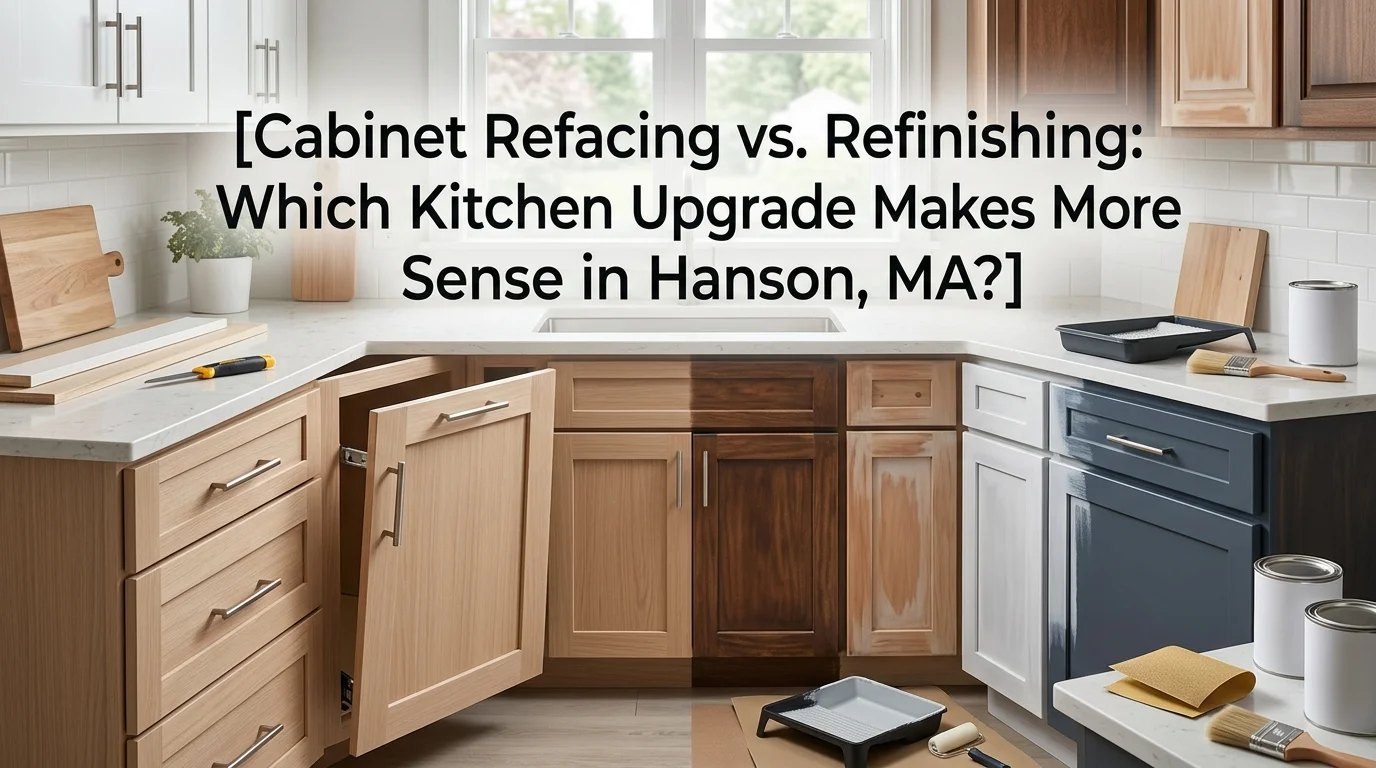
Refacing and refreshing cabinets can both help freshen up a dated kitchen without the expense and disruption of replacement cabinets. The decision will depend on your current cabinets, the amount of transformation you wish to give your cabinets, and the amount of money you want to spend.
But for Hanson homeowners, it’s not just a matter of picking the cheaper one. Refinishing alters the visible exterior components much more extensively than refacing, and it utilizes the cabinet surfaces that are already there.
What Is the Real Difference Between Cabinet Refacing and Refinishing?
The main difference is what gets changed.
Cabinet refinishing is the process of maintaining existing cabinet boxes, drawer fronts, and doors. This involves cleaning, repair, preparatory work, and applying new paint, stain, or protective finish to the surfaces.
With cabinet refacing, the cabinet boxes stay in place, while the doors and drawer fronts are replaced. The visible parts of the cabinet boxes are then covered with a matching veneer or other finish.
This means refinishing is mainly a surface transformation, while refacing is a larger visual redesign without replacing the entire cabinet system.
When Cabinet Refinishing Makes the Most Sense
The refinishing process may be a viable option when the cabinet is still structurally sound. You might not need to replace anything if you want the existing style and placement of the door, but you don’t like the color, wood tone, scratches, or worn finish.
This option is a good fit for goals like:
- Change the painted cabinets to a different color
- Restore the appearance of solid wood cabinets
- Reduce visible scratches and surface wear
- Update an outdated stain or finish
- Keep the existing cabinet doors and drawers
- Refresh the kitchen without major construction
The condition of the cabinet material is important. Solid wood is frequently a good choice for refinishing because the surface can be sanded and buffed. Other laminate or manufactured surfaces can be painted, but may need proper preparation and a coating system.
The Typical Refinishing Process
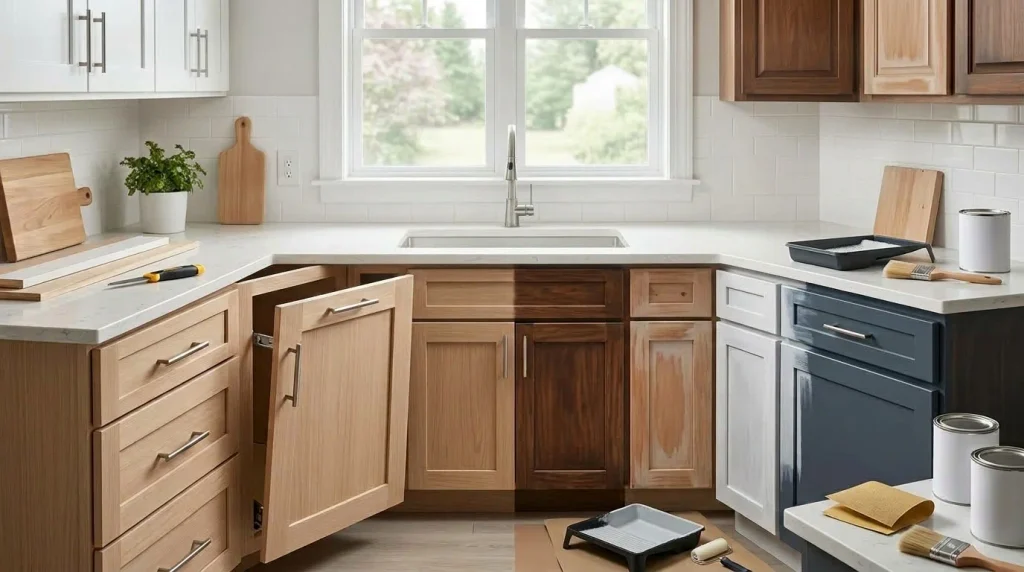
Professional refinishing is more than just painting. The process could involve door cleaning, degreasing, light repairs, sanding or surface preparation, priming as necessary, new finish application, and reinstalling doors and hardware.
Estimated costs to refinish cabinets are typically quite variable for Massachusetts projects, depending on the size of the kitchen and the work being done. Other estimates for standard kitchens in Massachusetts range from $1200 to $5500, and other areas of the country may be higher depending on the number of doors to be refinished, the repairs, and the type of refinishing to be used.
The important point for Hanson homeowners is that refinishing is usually the lower-cost option when the existing cabinets are worth keeping.
When Cabinet Refacing May Be Worth the Added Cost
Refacing is more suitable if your cabinets are structurally fit and you’re looking to make the kitchen appear significantly different. For example, you may have old raised-panel doors but prefer clean lines and a modern shaker cabinet style. Refinishing can change the color, but it cannot change the actual door design.
With refacing, you can update:
- Cabinet door styles
- Drawer fronts
- Wood grain or veneer appearance
- Hinges
- Hardware
- Visible cabinet surfaces
The existing cabinet boxes remain in place, which can make refacing less disruptive than a complete cabinet replacement.
The areas around Greater Boston and Massachusetts have a wide range of pricing guides for 2026. In the Greater Boston area, a typical refacing project costs from $6,000 to $15,000, and project and statewide estimates can be more expensive depending on the kitchen size and materials. The final cost can be raised by premium real wood veneer, custom doors, specialty finishes, and a large quantity of cabinets.
Cabinet Refacing vs. Refinishing: A Quick Comparison
| Factor | Cabinet Refinishing | Cabinet Refacing |
| Existing doors | Kept | Replaced |
| Cabinet boxes | Kept | Kept if structurally sound |
| Door style | Usually remains the same | Can be completely changed |
| Color options | Extensive | Extensive |
| Typical project scope | Surface restoration | Major visual redesign |
| Cost | Usually lower | Usually higher |
| Disruption | Generally limited | More involved, but less than a full replacement |
There is still a need for an individual estimate for a Hanson project in the area. The final cost can vary based on the number of cabinet doors, drawer fronts, repairs, and materials chosen, as well as the amount of work.
Cost, Time, and Long-Term Value
Cost is often the first thing homeowners compare, but the cheapest option is not always the best value. If your cabinets are a good style with good doors and strong boxes, it may not be worth thousands more to reface the cabinets, as you get more value out of the existing hardware. Refinishing may offer you the desired appearance without compromising the original materials.
On the other hand, if you strongly dislike your current cabinet door style, refinishing will not solve that problem.
Here is a general way to think about the numbers:
Refinishing: Many projects in Massachusetts are in the $1,200 to $5,500 range, and larger, more elaborate kitchens can cost more.
Refacing: Published in 2026, Greater Boston estimates that a typical project is $6,000 to $15,000 depending on the materials chosen and the size of the kitchen; however, these costs can be exceeded based on the materials selected and the size of the kitchen.
Full replacement: Can move into the $25,000 to $50,000 or more range once demolition, new cabinets, installation, and related kitchen work are involved.
These are rough estimates, not actual prices, but they illustrate the point that it can be a good financial decision to retain good cabinets.
Cabinet Condition: What to Check Before Deciding
Prior to making a purchasing decision, there are some questions you should ask regarding the cabinet’s condition.
Ask yourself:
Are the Cabinet Boxes Structurally Sound?
The key to refacing is a good set of cabinet boxes. If the water absorption is severe, the wood shows signs of deterioration, or the structural elements are broken, replacement may be the recommended solution.
Do the Doors Still Function Properly?
Often, loose hinges can be repaired or replaced. But if the doors are warped or damaged, they might not be feasible to refinish.
Do You Want a New Style or Just a New Appearance?
This question often makes the decision easier.
If your answer is “I like the cabinets, but they look old,” refinishing may be enough.
If your answer is “I want my kitchen to look completely different,” refacing may offer a greater transformation.
Design Flexibility: Paint, Stain, Veneer, and Hardware
One of the biggest perks of refinishing is that you get a whole new look without ripping out your old doors. If you’ve got painted cabinets, you can go lighter, darker, or totally switch up the vibe. With real wood, refinishing lets you show off or change the wood grain.
Refacing takes things a step further; you can switch up the door style altogether. Maybe you want to leave behind classic panels and try shaker, flat-panel, or something else that matches the kitchen you’ve been dreaming about.
Don’t underestimate hardware, either. Swapping handles and knobs can make a huge impact. But hardware isn’t magic; it won’t fix damaged doors or bring an outdated profile into this decade.
DIY vs. Professional Cabinet Updates
Touching up a cabinet is doable for most people. But if you’re thinking about transforming your whole kitchen, the job’s way more involved. Cabinets get covered in grease and cooking grime, and if you don’t prep right, you’ll end up with peeling paint, streaky coverage, or a finish that chips after a few months. Refacing calls for careful measurements, plus you’ve got to install things so drawers and doors line up.
A professional can assess the cabinet material and condition before recommending a method. Kitchen Redux can help Hanson homeowners evaluate whether their existing cabinets are better suited for refinishing or whether refacing would provide the larger transformation they want.
How to Choose Between Refacing and Refinishing
Use this simple guide:
Choose refinishing if:
- Your cabinet boxes and doors are in good condition
- You like the current door style
- You mainly want a new color or finish
- You want to keep costs lower
- You want less disruption to your kitchen
Consider refacing if:
- The cabinet boxes are solid
- You want completely new doors and drawer fronts
- Your current style feels outdated
- You want more design flexibility
- You are comfortable with a larger project budget
Consider full replacement if:
- The cabinet boxes have major structural damage
- You want to change the kitchen layout
- You need significantly different storage
- Water damage or deterioration is extensive
Frequently Asked Questions
Is it cheaper to reface or refinish cabinets?
Refinishing is generally less expensive because the existing doors and drawer fronts are reused. Refacing involves new doors, drawer fronts, materials, and installation. Massachusetts and Greater Boston estimates commonly show refinishing in the lower thousands, while refacing often starts at several thousand dollars more.
How long does cabinet refinishing take?
The timeline varies based on the kitchen’s size and how much preparation the cabinets need. Some Massachusetts refinishing estimates place a typical project at approximately 4 to 7 days, although repairs and complex finishes can extend the schedule.
Can all cabinets be refinished?
No. The cabinet material and condition matter. Solid wood cabinets are often good candidates, while severely damaged, swollen, or structurally failing cabinets may need replacement.
Does cabinet refacing change the cabinet layout?
Usually, no. Refacing keeps the existing cabinet boxes in place, so the basic kitchen layout remains the same. It changes the visible surfaces rather than relocating the cabinetry.
Final Thoughts: The Right Choice Depends on Your Cabinets and Goals
Cabinet refacing vs. refinishing is ultimately a question of how much change you need. Refinishing is often the better fit when your cabinets are structurally sound and you want a fresh color, restored finish, or updated appearance. Refacing can make more sense when you want new door styles and a more dramatic visual transformation without paying for a complete cabinet replacement.
For homeowners in Hanson, MA, comparing the condition of the cabinets with the expected cost can make the decision much clearer. Kitchen Redux can help you determine which option fits your kitchen, budget, and long-term plans.