
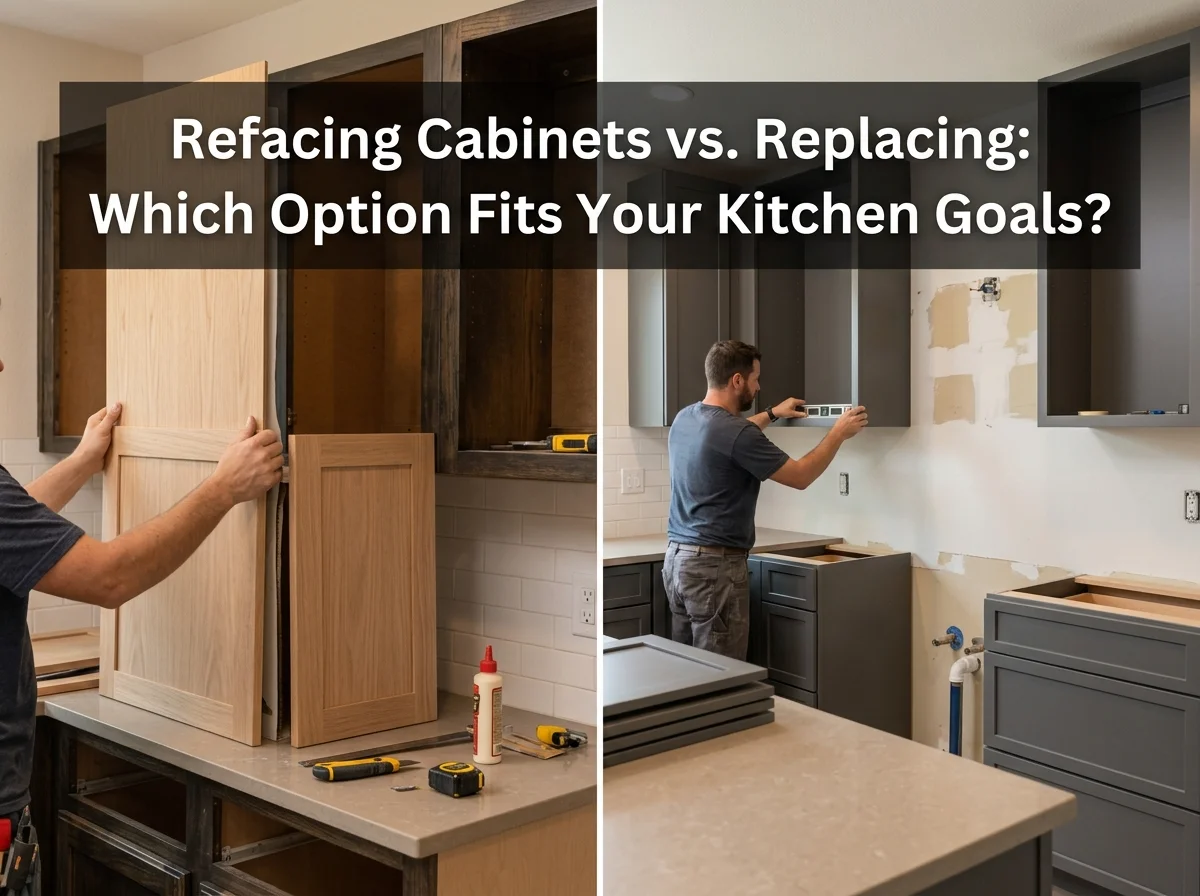
It’s not always necessary to replace all your kitchen cabinets to improve the way they look and operate. The layout is correct in some homes, the cabinet boxes are solid, and the doors, drawer fronts, or finish are dated. Other kitchens suffer from storage or structural issues that can’t be remedied with a surface treatment. That’s where the cabinet refacing vs replacing decision lies. For Boston homeowners, the right option depends on how well the current cabinets work and how much needs to change. Your Existing Cabinet Boxes Are in Good Condition
Before making the decision to reface or replace, the condition of the cabinets, the layout of the kitchen, and the scope of the renovations should be considered.
Cabinet Refacing vs Cabinet Replacement: What Actually Changes?
The two options can both give your kitchen a significantly updated look, but they do not require the same level of work. Refacing keeps the cabinet structure in place, while replacement removes the old cabinets and installs new cabinetry.
What Cabinet Refacing Changes
Refacing is focused on the parts of the cabinets that are used every day. The existing cabinet boxes and frames stay in place rather than being removed from the kitchen. The old cabinet doors and drawer fronts are replaced with new ones. Exposed cabinet surfaces receive a new covering or finish, often using materials such as wood veneer or laminate. New cabinet hardware can also be added to change the look of the finished cabinetry.
The underlying cabinet construction does not change. Refacing therefore suits a kitchen where the existing storage arrangement still makes sense, and the cabinet boxes remain in good condition.
What Full Cabinet Replacement Changes
Full Cabinet replacement starts with removing the existing cabinets. New cabinet boxes then form the foundation for the updated kitchen. Because the cabinetry itself is new, the design has more room to change. Cabinet dimensions, drawer arrangements, storage configurations, and cabinet locations may all be reconsidered as part of the project.
That difference matters when the existing kitchen has functional problems. New doors and a different finish address appearance, but they do not create storage where none exists or correct a layout that no longer works.
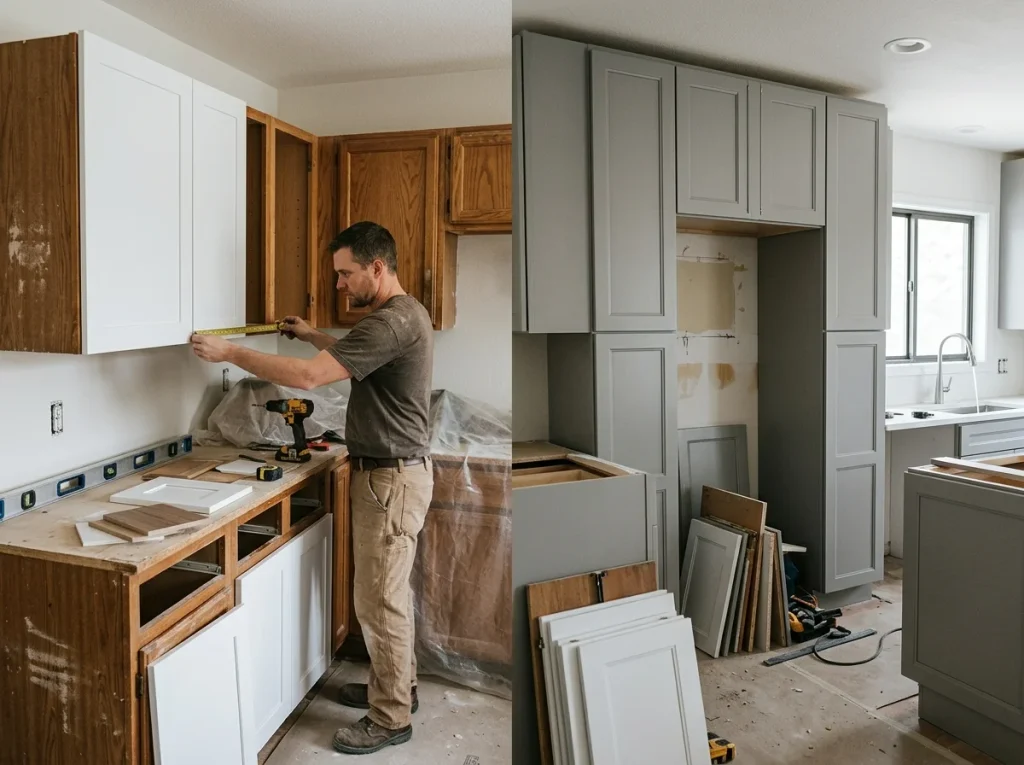
What Does Cabinet Refacing or Replacement Cost in Boston?
Cost matters when planning a kitchen renovation, but the two projects cover different amounts of work. The cabinet replacement vs refacing cost depends on the materials, quantity, kitchen size, and installation labor involved.
Cabinet Refacing Cost in Boston
Cabinet refacing cost in Boston is $5,900 to $15,000, based on kitchen size. Price changes with the number of doors and materials like laminate or wood veneer, which run higher in Boston. Still, refacing is often 40% to 60% cheaper than replacing your cabinets.
Cabinet Replacement Cost in Boston
Replacing cabinets costs more than refacing because you’re paying for new structural boxes, doors, drawer fronts, and installation labor. New cabinets in the Boston area typically run $7,000 to $25,000+ (and up to $45,000+ for custom cabinets), landing at the higher end of national averages. Changing the layout adds more, since countertops and appliances often need work too. Mid-range remodels reach $40,000 to $75,000.
Here is how refacing and replacement compare side by side in your kitchen.
| Cost Factor | Refacing | Replacement |
| Existing cabinet boxes | Kept | Removed |
| Doors and drawer fronts | Updated | New |
| New cabinet boxes | No | Yes |
| Installation scope | More limited | More extensive |
| Layout changes | Limited | Greater flexibility |
| Main cost drivers | Materials, doors, hardware, labor | Cabinets, materials, labor, layout changes |
For both options, the actual project scope matters more than a generic price range. Cabinet condition, kitchen size, and installation work all affect the final quote.
When Refacing Fits an Existing Kitchen Layout
A kitchen that already works well does not necessarily need a new cabinet system. If the cabinet boxes are sound and the storage arrangement suits the household, changing the parts may address the main concern.
Your Current Cabinet Boxes Are Still Structurally Sound
The cabinet doors look worn while the structure behind them remains usable. That distinction is worth checking before planning a larger renovation. Look inside the cabinets and examine the boxes, frames, shelves, and drawer areas. Water damage or deterioration points to a structural concern. A new exterior does not correct damage within the cabinet structure.
Refacing works better when those underlying components remain stable. The homeowner then gets a new cabinet visual appeal without removing cabinetry that still serves its purpose.
The Current Layout Already Works
Think about how the kitchen performs everyday tasks. If the cabinet locations work well with the countertops and appliances, changing the entire layout may add work without solving a real problem. Storage is part of that assessment. A kitchen with enough usable storage has less reason to replace cabinets simply for the sake of changing their arrangement.
When Replacement Better Matches Your Kitchen Plans
Refacing has limits. Once the project involves damaged cabinet structures, storage, or a different kitchen footprint, keeping the existing cabinetry may no longer make sense.
The Existing Cabinets Have Structural Problems
Cabinet condition needs attention before any decision about the finish. Severe water damage or deterioration affects the cabinet boxes that a refacing project is designed to keep. Cabinet frames also matter. If these structural parts are damaged, installing new doors and drawer fronts does not address the underlying problem.
Replacement takes a different approach because the old cabinetry is removed. New cabinet construction then provides the foundation for the rest of the kitchen renovation.
You Want a Different Kitchen Layout
Changing the kitchen layout involves more than moving doors or selecting a new finish. Cabinet locations and storage areas may all need to change. Replacement gives the project room to make those adjustments. New cabinets may be positioned around appliance placement, countertops, and the desired working areas of the kitchen.
A layout change may also affect other parts of the renovation. Altering the cabinet footprint, for example, may require countertop replacement or related work.
Which Option Fits Your Kitchen Goals?
The decision starts with the cabinetry already in the room. A good-looking finish does not solve a structural problem, and new cabinets are not always necessary when the existing system still works.
Refacing is worth considering when:
- The cabinet boxes are still sound.
- The current layout works well.
- Existing storage fulfills your needs.
- Appearance is the main concern.
- New doors, drawer fronts, finishes, or hardware address the issue.
Replacement is worth considering when:
- The cabinet boxes have damage.
- The layout creates functional problems.
- Storage demands have changed.
- Different cabinet dimensions are needed.
- The project includes major kitchen remodeling.
The kitchen remodeling budget should reflect what you want the project to accomplish. Comparing the price of a surface update with the price of a complete cabinet system does not tell the whole story because the work performed by each option is different.
FAQs About Cabinet Refacing vs. Replacing
Is cabinet refacing cheaper than replacing cabinets?
Yes. Refacing keeps existing cabinet boxes and replaces only fronts and veneers. Swapping structural components during a full replacement increases materials, labor, and total costs.
How do I know if my cabinets are suitable for refacing?
Inspect structural frames for warping or water damage. If cabinet boxes remain sturdy and your current layout functions well, the existing system easily supports refacing.
Does cabinet refacing change the kitchen layout?
No. Refacing retains your current footprint, updating doors, drawer fronts, and hardware. Changing overall dimensions or relocating appliances needs a full replacement instead.
When should I replace kitchen cabinets?
Replace cabinets when structural damage compromises stability or when your current kitchen layout fails. Full replacement allows custom dimensions and expanded storage space.
Is cabinet refacing worth it for a Boston kitchen?
Yes, if cabinet frames are solid. High Boston labor rates make refacing cost-effective, saving 40% to 50% when compared to full replacements.
Final Thoughts
Refacing and replacement solve different cabinet problems. Refacing works around an existing cabinet system that remains structurally useful, while replacement brings in new cabinetry for a larger change. The condition of the cabinet boxes comes first, followed by the way the kitchen functions and the changes you want from the renovation. Those details give Boston homeowners a practical basis for choosing the scope that fits their kitchen goals.
Kitchen Redux works with homeowners planning cabinet updates and provides cabinet refacing services for kitchen renovations. Boston homeowners who need help comparing their cabinet renovation options can contact Kitchen Redux to discuss the project and request a consultation or quote.