
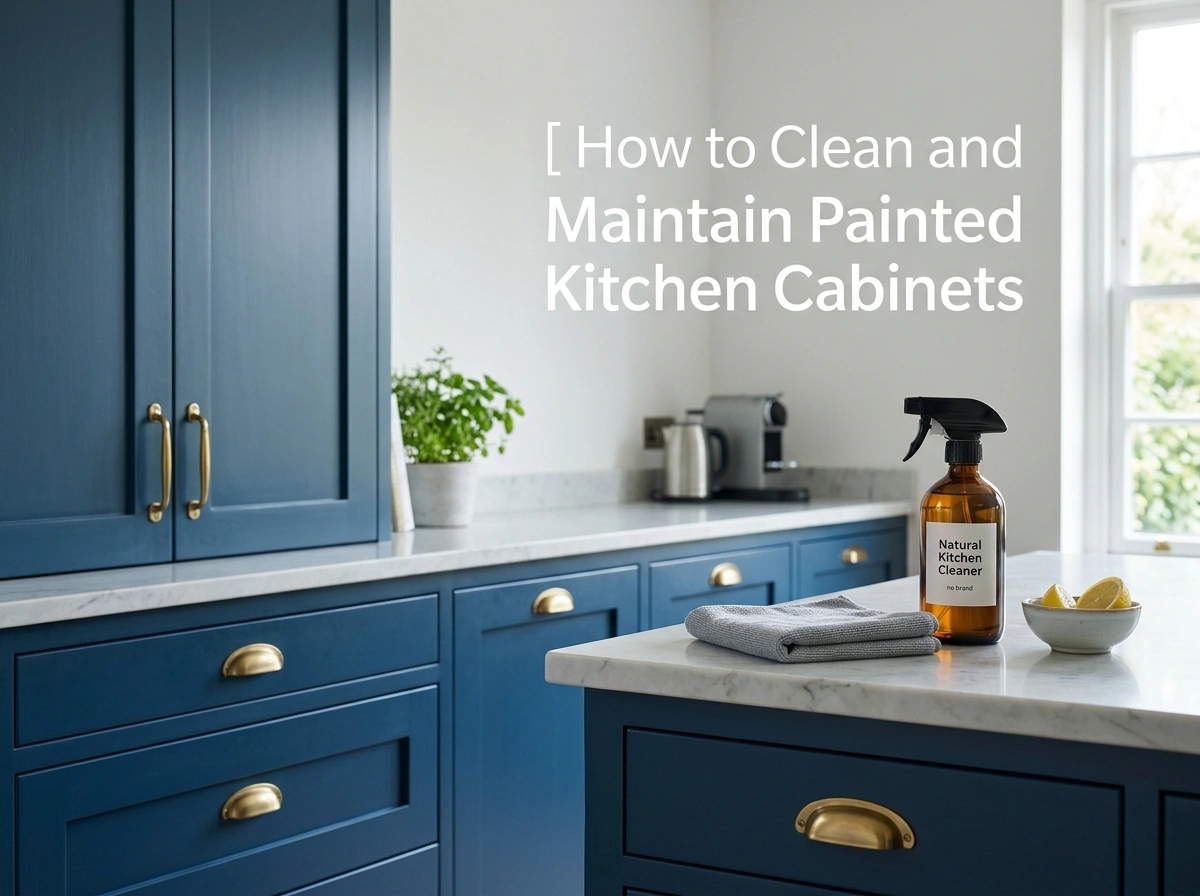
Painted cabinets look great, but grease around the stove, oils from hands near the handles, and steam from cooking can build up on the finish. Over time, this can make the color look less vibrant and leave the surface looking dirty. Keeping painted cabinets clean is not difficult, but using the wrong material, cloth, or cleaner can damage the finish over time. Proper care is especially important after cabinet painting, as gentle cleaning helps protect the fresh finish and maintain its appearance. Whether your kitchen gets heavy daily use or you cook only a few times a week, the basic cleaning principles stay the same.
Why Your Painted Cabinet Finish Deserves a Gentler Cleaning Method
A painted cabinet door isn’t the same as a stained one, even though they can look similar from across the room. Stain soaks into the wood grain. Paint sits on top as a coating, which means it’s more exposed to whatever touches it, whether that’s a scrub brush, a harsh chemical, or years of hands opening the same drawer.
That difference matters when deciding how much pressure to use or which cleaner to reach for. Push too hard on a stained cabinet, and the color usually survives fine. Do the same on paint, and you risk taking a thin layer of it off with the grime.
Cabinet material adds another layer here. MDF doors tend to swell or soften at the edges if moisture gets in, especially around seams. Solid wood holds up better against water but scratches more easily with the wrong cloth. Knowing what your cabinets are made of helps you judge how careful you need to be.
How Often You Should Clean Painted Kitchen Cabinets
There’s no universal answer here. Kitchens that see daily cooking, especially frying or high-heat sautéing, build up grease faster than kitchens used mainly for reheating. The right cleaning frequency depends on how much residue actually accumulates each week, not on a fixed calendar rule.
Everyday Wipe-Downs vs. Weekly Deep Cleans
A thirty-second wipe near the stove and cabinet handles keeps light grease from settling in before it hardens. Save the fuller clean, covering doors, drawer fronts, and cabinet frames, for once a week or so. Skip it too long, and a buildup that would’ve taken seconds to remove turns into something needing real scrubbing.
Signs Your Cabinets Are Overdue for Cleaning
A few clues tell you it’s time. Handles feel slightly tacky under your fingers. The paint looks a touch duller than it did weeks back. Run a finger along the top edge of a door, and you’ll notice a faint film. None of that means damage has happened yet, but cleaning shouldn’t wait much longer.
Step-by-Step: How to Clean Painted Cabinets Without Damaging the Finish
Getting good results has more to do with the correct method than which product sits under your sink. This method works across most painted finishes.
- Wipe the surface with a microfiber cloth to remove loose dust before introducing any water.
- Mix a small amount of mild dish soap into warm water.
- Dip a soft cloth into the solution and wring it out well so it’s damp rather than dripping.
- Wipe along the grain with light, even pressure rather than scrubbing.
- Go over the surface with a second cloth dampened in plain water to remove soap residue.
- Dry immediately with a clean cloth, giving extra attention to corners and seams.
| Pro Tip: If your cabinets were painted recently, hold off on regular cleaning for several weeks while the finish cures. Fresh paint stays soft longer than expected, and marks or dents occur more easily during that window. |
How to Remove Grease and Stubborn Buildup from Painted Cabinet Doors
Grease clings to painted surfaces differently than it does to laminate or stainless steel. Left alone for a couple of weeks, it hardens into a film that’s genuinely tough to lift. The answer isn’t a stronger chemical. It’s usually a more concentrated soap mix and a bit more patience.
One mistake shows up constantly: reaching for a scouring pad or melamine sponge on grease near the stove. Those tools work by physically wearing down whatever surface they touch, and on painted cabinets, that means removing tiny amounts of paint along with the grease. A soft cloth, a stronger soap solution, and a minute of dwell time usually get the same result without that risk.
| Cleaning Issue | Suitable Approach | What to Avoid |
| Light dust or splatter | Dry microfiber cloth, or a lightly damp one | Wet sponges, paper towels |
| Grease film near the stove | Warm water with extra dish soap, soft cloth | Ammonia cleaners, degreasers |
| Stuck-on food residue | Let the solution sit a minute, then wipe gently | Scrubbing pads, scraping tools |
| Sticky cabinet hardware | Small brush with mild soap solution | Soaking hardware in water |
Cleaning Products and Tools to Avoid on Painted Cabinets
A handful of common household products are simply too harsh for painted finishes, no matter what the packaging claims.
- Bleach and ammonia-based cleaners break down the sheen with repeated use and often leave a cloudy or streaked look.
- Magic Erasers and melamine sponges work through micro-abrasion, wearing down paint faster than most people realize.
- Steel wool or scrubbing pads leave fine scratches even under light pressure, catching light differently than the surrounding finish.
- Oversaturated cloths let water pool at seams and corners, and trapped moisture can eventually cause paint to lift or bubble.
| Callout: Before trying any new cleaner across your kitchen, test it on an inconspicuous spot first, like the inside edge of a door. It takes a minute and can save you from a visible mistake on the cabinet fronts. |
Everyday Habits That Keep Painted Cabinets Looking New
Cleaning deals with problems after they form. These habits stop most of them before they start.
- Wipe spills up right away instead of letting them sit overnight.
- Keep damp dish towels off cabinet doors and drawer fronts. Hang them somewhere else.
- Add liners inside cabinets near the sink or stove to catch moisture before it reaches the wood.
- Wash greasy hands before touching handles and pulls.
- Wipe hardware occasionally since it collects oils faster than flat surfaces do.
When Cleaning Isn’t Enough: Scratches, Chips, and Touch-Ups
Cleaning handles grime. It doesn’t undo actual paint damage. A cabinet that just looks dull needs a wipe-down. One with visible chips, peeling near the edges, or worn spots around the handles is dealing with a different problem.
Touch-up paint can work on small nicks, though matching the exact color and sheen is trickier than most people expect. A slightly off shade or a different texture often stands out more than the original chip did. Once wear spreads across multiple doors, or the whole kitchen starts looking tired, touch-ups stop being a real fix. That’s usually when refinishing makes more sense, which is the kind of work our cabinet restoring service at Kitchen Redux handles.
| Pro Tip: Never apply touch-up paint over a surface that’s still greasy or dusty. It won’t bond correctly, and it tends to peel again within a matter of weeks. |
Frequently Asked Questions About Cleaning and Caring for Painted Cabinets
Can I use vinegar to clean painted kitchen cabinets?
Vinegar’s acidity can dull or damage certain painted finishes over time. A mild dish soap solution is safer unless your paint manufacturer says otherwise.
How do I clean painted cabinets without leaving streaks?
Streaks usually trace back to leftover soap. Rinse with a plain damp cloth, then dry with a separate clean one.
Is it safe to use a Magic Eraser on painted cabinet doors?
Better to avoid it. The mild abrasive action wears down paint sheen over time, especially on matte or satin finishes.
How long should new cabinet paint cure before regular cleaning?
Most finishes need several weeks. Confirm the timeframe with whoever applied the paint, since it varies by product.
Final Thoughts
Regular cleaning goes a long way with painted cabinets. Stay on top of grease and spills, skip the harsh stuff, and the finish holds up for years without much trouble.
Kitchen Redux is a cabinet restoring and refinishing company based in Hanson, MA, working with painted cabinets throughout the area. Our team handles everything from small touch-ups to full cabinet restoration when a kitchen needs more than a wipe-down can fix.
If your cabinets need a closer look, call us at (774) 773-8387 to book an appointment or schedule a consultation.