
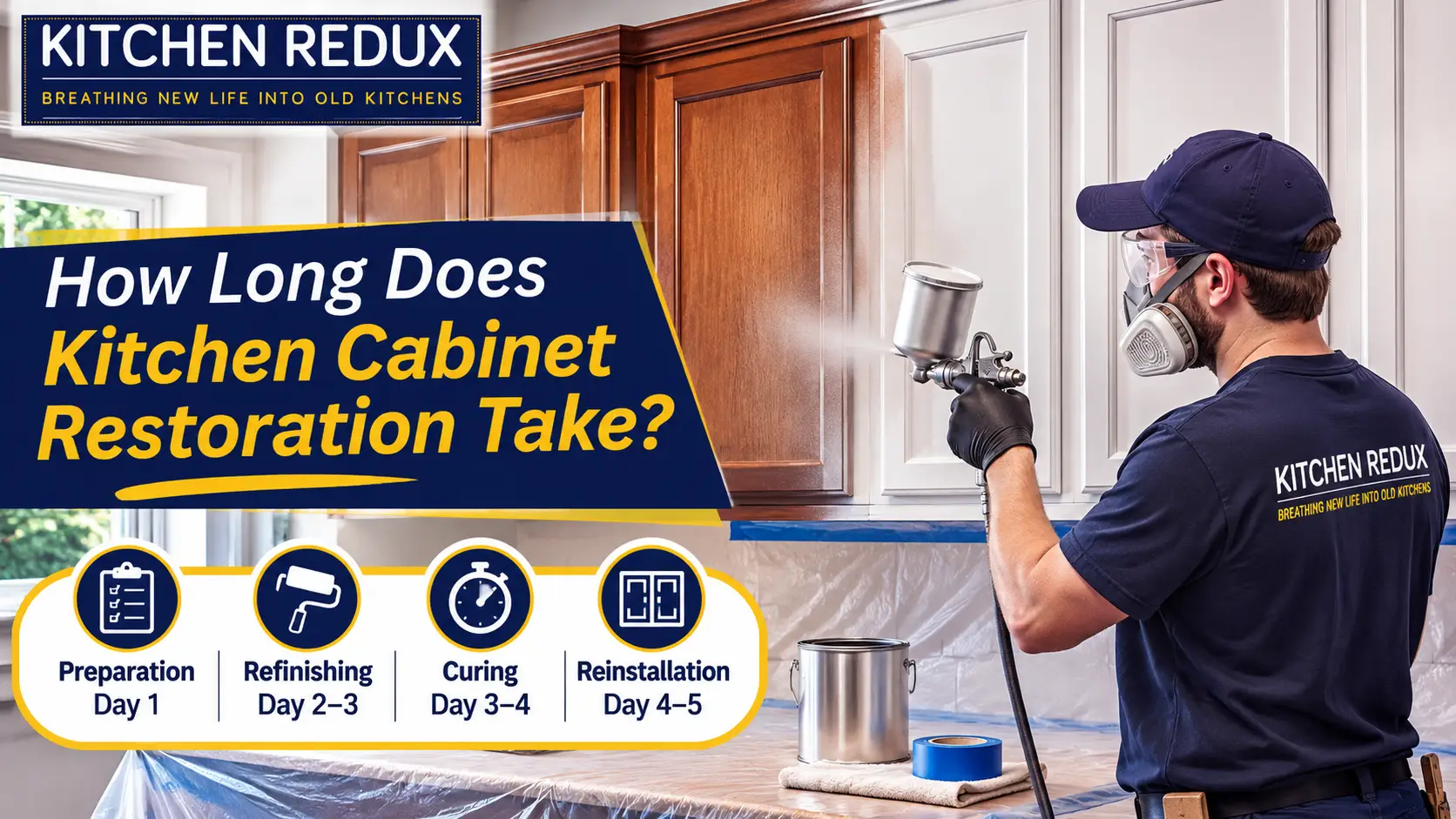
You want your cabinets looking sharp again. You also need to cook dinner next week without stepping over drop cloths. That’s the real tension behind kitchen cabinet restoration time. The honest answer depends on the job. Scope sets the pace, along with how many doors and drawers you have and the shape they’re in. Repairs add time. The finish you choose brings its own drying and curing schedule. Hands-on labor is only part of the picture, because the full timeline runs until your cabinets can take normal use again. Here’s what shapes that schedule and how to keep yours moving.
What Does a Typical Kitchen Cabinet Restoration Timeline Look Like?
No two kitchens run on the same clock. Solid cabinets that look tired move fast since there’s less to fix. Heavy grease, chewed-up edges, or a full color change means more prep and more coats. Every coat brings its own drying window.
Keep two numbers in mind. Active work is the time someone is actually cleaning, repairing, or finishing in your kitchen. Total project duration adds the drying gaps and the wait before your cabinets are ready for normal use. A light restoration with minor touch-ups can be fairly short on site. Extensive repairs combined with a full finish renewal can run several days.
The table below gives you a rough idea of the time involved.
| Project scope | What sets the pace |
| Light refresh on sound cabinets | Cleaning time and the number of surfaces |
| Standard restoration with several prep steps | Door and drawer quantity, number of coats, and time between coats |
| Heavy repairs or detailed door styles | Repair work and slow prep around profiles |
Which Stages Determine the Cabinet Restoration Process Time?
Restoration works like a chain, and each stage leans on the one before it. Skimp on prep and the new finish won’t grab properly. Recoat too soon, and you can trap a soft layer underneath.
Assessment and Preparation
A good restorer walks the whole kitchen first. They confirm the scope and the finish you want, then decide what stays mounted and what comes down. Hardware removal happens here when the method calls for it, with every hinge and pull bagged and labeled. Counters and floors get covered. These early cabinet preparation calls shape how many days the rest of the job needs.
Surface Cleaning, Sanding, and Repairs
Grease is the first enemy. Years of cooking leave a film near the range that no new coating will bond to, so surface cleaning often eats a big share of the schedule. Some jobs call for light sanding with fine sandpaper. Others need only a scuff or nothing at all. Solid hardwood takes prep differently than plywood or MDF, and thin wood veneer can’t handle aggressive sanding. Veneer repair and other cabinet repairs add time only when they’re actually needed.
Applying the New Finish
Your finish choice drives this stage. A painted system usually starts with primer application, followed by two or more coats of cabinet paint. The previous coat needs time to dry before you apply another. Stained cabinets work differently. Stain application comes first, and then a protective finish goes over the wood stain. A lighter restoration may skip both and lay a fresh clear or tinted coat over the existing finish.
Reassembly and Final Checks
Cabinet doors and drawers go back on once the finish can take handling. Hinges get adjusted so doors hang straight and close evenly. Then every run gets checked under good light for misses. Follow the aftercare instructions closely, since they tell you when the kitchen goes back to full duty.
| Dry Isn’t the Same as CuredCabinet finishes can dry to the touch in a few hours without being fully hardened. Complete curing may take several days or even weeks. The product instructions and your contractor can tell you when the finish is ready for regular use. |
What Can Extend Old Cabinet Restoration Time?
Kitchen size fools people. A small kitchen full of detailed doors can take longer than a big one with flat slabs. Project complexity is what really sets the clock.
Cabinet Quantity and Design Details
Count your doors and drawers. Every door has a face, a back, and edges. Raised panels and routed profiles slow everything down because each groove has to be cleaned and coated without pooling. Plain slab doors go much faster.
Existing Finish and Repair Needs
Old finishes don’t always cooperate. Heavy buildup can take several rounds of cleaning before anything new goes on. Lifting veneer, deep gouges, and loose joints each add their own repair step. These issues are common considerations when restoring old kitchen cabinets. That’s not a lost cause. It simply means the project will take longer.
Drying Conditions and Product Requirements
Weather gets a vote in every finishing job. Cold rooms slow paint drying, and so do damp air and weak airflow. A humid Massachusetts summer or a chilly, drafty kitchen in winter can make each coat take longer to dry. Every coating also comes with its own rules for temperature and recoat time. Follow them or the finish can fail early.
How Does Professional Cabinet Restoration Time Compare With DIY Work?
The timeline also depends on who handles the work, how the project is scheduled, and which finish you choose. Neither route wins every time.
DIY projects tend to sprawl. You clean on a Tuesday night, sand on Saturday, and wait on drying before you can flip the doors. One person has to juggle every stage around a day job, so a full kitchen can stretch across a week or two of evenings and weekends. A professional crew splits the tasks and keeps one batch moving while another dries. That usually trims professional cabinet restoration time, but a long repair list slows anybody down. Either way, don’t cut prep or rush the cure to save a couple of days. Rushed finishes are the ones that peel.

How Can You Keep Your Cabinet Restoration Project on Schedule?
Some waiting is built into the work, and curing takes what it takes. Plenty of other delays are avoidable. Most trace back to choices left open before day one. Run through this list before your start date.
- Lock in your color and finish before work begins.
- Empty the cabinets and clear the counters the way your contractor asks.
- Bring up hardware changes and known repairs before the schedule is set.
- Ask for the active-work window and the total project timeline.
- Confirm when cabinets can be handled and when they’re ready for normal use.
- Follow the aftercare instructions for your newly finished surfaces.
Planning Kitchen Cabinet Restoration in Taunton, MA
A real schedule starts with someone looking at your actual cabinets. A generic timeline can’t see the grease over your stove or the worn edges by the sink. Kitchen Redux works with Taunton homeowners from Hanson. Our cabinet restoring service keeps your doors and drawer fronts in place while we deep clean, blend worn spots, and apply a fresh clear or tinted finish. There are no door lead times to wait on. Want a new color instead? That’s cabinet painting, which runs on its own timeline.
Your timeline comes down to scope, prep, repairs, the finish you pick, and its cure time. Along with timing, understanding the kitchen cabinet restoration cost can help you plan your project. Contact Kitchen Redux or call (774) 773-8387 to book a free in-home consultation. You’ll get a written quote with a realistic timeline for your kitchen.
Frequently Asked Questions
Here are quick answers on timing.
How Long Does It Take to Refinish Kitchen Cabinets?
Prep work and the finish system decide that number. Cabinet refinishing time also includes drying between coats, and paint or stain systems usually need more coats than a clear refresh. Only someone who has seen your kitchen can give you a real estimate. Be wary of a firm timeline quoted sight unseen.
How Long Should I Wait Before Using Restored Cabinets?
Watch for three separate milestones. Surface dry comes first, when the finish stops feeling tacky. Safe handling comes next, when doors and pulls can take gentle use. A full cure takes the longest, so go easy and skip harsh cleaners until then. Your product label and your contractor’s instructions set the actual waiting periods.
Can I Keep Using My Kitchen During Cabinet Restoration?
Expect partial access, not full use of the room. It depends on the work area, the finish, ventilation needs, and the crew’s workflow. Methods that leave doors mounted can keep more of the room usable. Still, plan for stretches when certain cabinets or counters are off-limits. Ask before work starts what you’ll be able to use and when.