
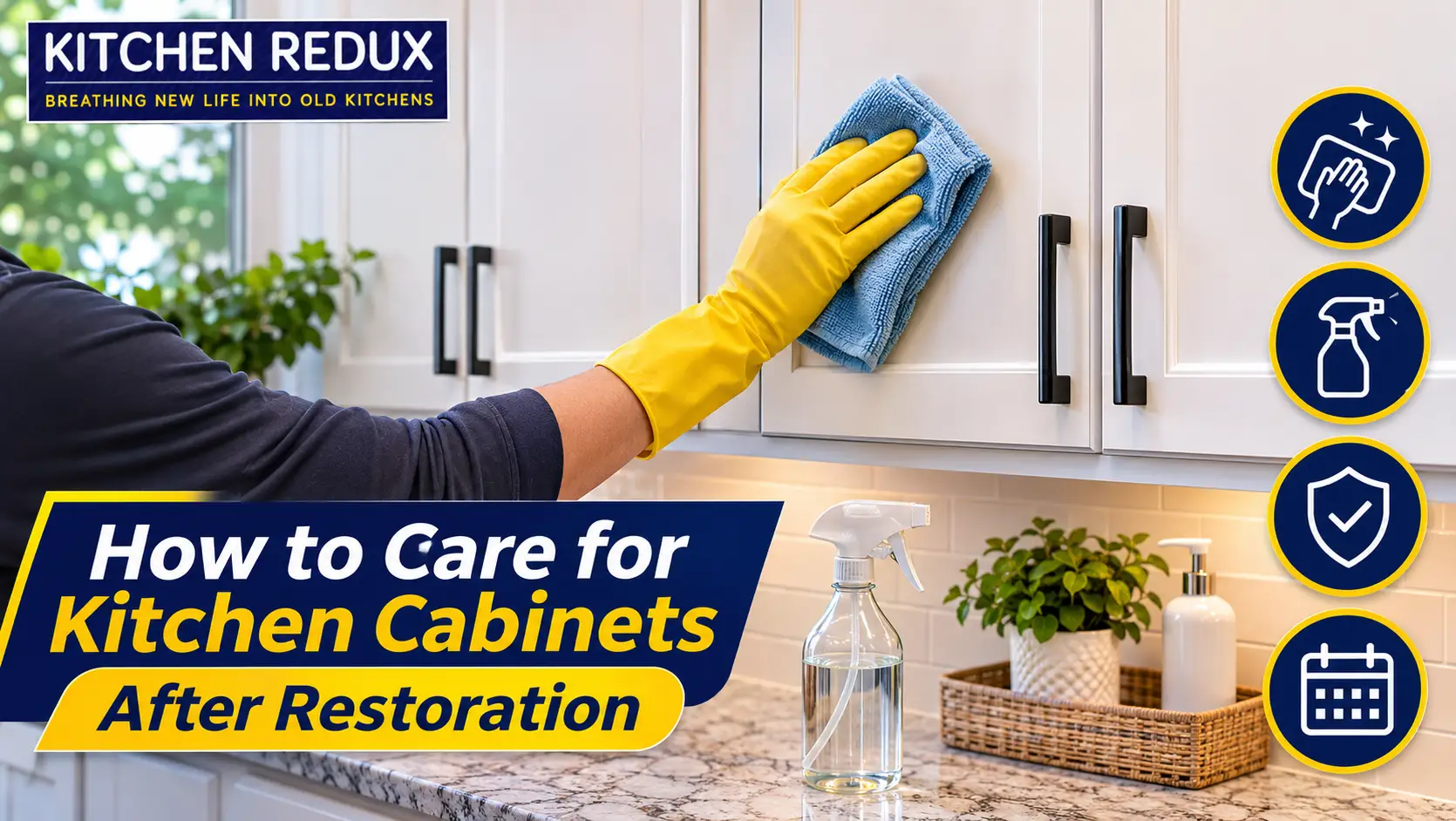
Freshly restored cabinets look great on day one. Then the kitchen goes back to work. Pasta water boils over. Greasy fingers grab the pantry handle. A new finish handles normal use. Harsh cleaners and standing water still wear it down. Here’s how to care for restored kitchen cabinets.
How Should Restored Kitchen Cabinets Be Cleaned?
Gentle cleaning done often beats heavy cleaning done rarely. Strong degreasers can dull a finish. Stiff scrubbers can scratch it. That damage adds up slowly, and you may not notice until the sheen is gone. Small wipe-downs work better. They lift dirt before it can bond.
Use Mild Cleaning Solutions and a Soft Cloth
Mix warm water with a few drops of mild dish soap. Wring a microfiber cloth until it’s barely damp. A dripping cloth pushes water into seams. Wipe gently, then rinse with plain water. Dry right away. These same gentle methods are useful when cleaning painted kitchen cabinets, although the specific finish may have its own care instructions. Test any new cleaner inside a cabinet door first.
Remove Grease and Everyday Spills Before They Build Up
Cabinets beside the stove take the worst of it. Cooking sends oil mist onto nearby doors. Fresh grease wipes off with mild soapy water. Old grease turns tacky and grabs dust. Hand oils slowly darken the finish around pulls. Some spills stain if they sit.
How Can Moisture and Humidity Damage Restored Cabinets?
Water is the most common enemy of cabinet finishes. The sink base gets more of it than any other spot. The panels beside the dishwasher aren’t far behind. Keeping both areas dry protects the finish. It also protects the material underneath, which is much harder to repair.
Wipe Up Water Spills and Keep Cabinet Edges Dry
Never let water sit on doors or drawer fronts. Moisture slips past the finish at edges and seams. Hardwood may swell or warp. Veneer can loosen if water reaches its glue. MDF swells at the edges and often stays that way. If moisture has already caused visible damage, whether water-damaged kitchen cabinets can be restored depends on the material and extent of the problem. Hang dish towels on a rack instead.
Manage Kitchen Humidity and Ventilation
Cooking steam is moisture too. Run the range hood while you cook. Taunton summers can be humid. Winter heat then dries the air out. Those swings stress wood joints and finishes. A dehumidifier helps in muggy months. Constant condensation points to a deeper moisture problem.
How Can Heat and Sunlight Affect the Cabinet Finish?
Heat and light work slowly. One hot afternoon won’t ruin a cabinet. Years of repeated exposure are another story. Some finishes soften under steady heat. Others fade in strong light. The change creeps in so quietly that most people miss it. Then one door looks different.

Reduce Heat Exposure Near Ovens and Cooking Appliances
Cabinets beside an oven warm up every time it runs. Keep the oven door closed after cooking. Toasters and air fryers vent heat straight up. Pull them out from under the upper cabinets before you use them. Your appliance manual usually lists safe clearance distances.
Limit Prolonged Direct Sunlight
Strong sunlight can fade stained wood or shift its tone. Some painted finishes may yellow unevenly. The giveaway is often a door that looks lighter than its neighbor. Blinds cut the harshest afternoon light. UV-filtering window film works too. Check doors near windows twice a year.
How Can Homeowners Protect the Cabinet Finish After Restoration?
The finish is your cabinet’s armor. It’s also thin. A few careless habits can wear through it. Protecting it takes little effort. Most of the work comes down to two things. One is what you clean with. The other is how you handle the doors.
Avoid Abrasive Cleaners and Harsh Chemicals
Skip scouring powder and steel wool. The rough side of a sponge belongs on pots. Ammonia can cloud certain coatings. Bleach and strong solvents carry the same risk. These are some of the issues that can contribute to cabinet painting problems after the work is finished. Go easy on polish too. Silicone-based polish builds up and complicates future touch-ups. Ask your finisher first.
Prevent Scratches, Dents, and Surface Wear
Most surface damage comes from everyday habits. Rings and keys scrape the lower doors. A pot swung out of a drawer can catch the face frame. Open doors by the handle, not the edge. Check that the soft bumpers are still in place so doors close quietly.
How Should Cabinet Hinges, Handles, and Drawer Slides Be Maintained?
A cabinet can look perfect and still work badly. Hardware loosens with use. It also collects grime where a cloth never reaches. So checking it is a separate job from cleaning. A few minutes with a screwdriver each month keeps doors lined up and drawers gliding.
Check Hinges, Handles, and Drawer Slides Regularly
Open every door and drawer once a month. Listen for squeaks. Watch for sagging doors. A loose handle usually just needs its screws snugged by hand. Don’t overtighten. That strips the hole. Many concealed hinges have small adjustment screws. The hinge maker’s guide shows which screw does what.
Keep Moving Parts Clean and Avoid Excess Lubrication
Crumbs and grease find their way into slide tracks. Vacuum drawers often. Wipe the tracks with a dry cloth. Many soft-close parts need no lubricant. If hardware sticks, clean the track before applying a dry lubricant. Wet spray leaves an oily film that attracts dirt particles.
What Cabinet Care Mistakes Should Homeowners Avoid?
Good intentions cause plenty of wear. Most of these mistakes come from trying too hard. Someone scrubs harder to get a door cleaner. Someone else grabs a spray that worked fine on the counters. Each habit seems harmless. Over time, each one chips away at the finish.
- Soaking the cloth. Damp is enough.
- Scrubbing hard. It wears down the sheen.
- Letting grease sit. Old grease is harder to remove.
- Ignoring a damp spot. It may be a leak.
- Using unapproved products. Not every cleaner suits every coating.
- Forcing stuck doors. Yanking strains the hinges.
How Often Should Restored Kitchen Cabinets Be Maintained?
No single schedule fits every home. A family that cooks every night needs more upkeep than someone who rarely uses the stove. Finish type matters too. So does how close each cabinet sits to the range. Doors beside it need far more attention than the pantry.
Follow a Simple Cabinet Maintenance Routine
Treat this as a simple starting point. If your finish came with its own care schedule, follow that schedule instead. Adjust the timing as you learn how your kitchen behaves. Some homes need weekly grease checks. Others can stretch that out with no trouble at all.
- Daily: Wipe up spills and dry wet surfaces.
- Weekly: Clean handles. Check doors near the stove.
- Monthly: Inspect edges. Test hinges and drawers.
- Periodically: Look for finish wear and recurring moisture.
When Do Restored Kitchen Cabinets Need Professional Attention?
Some problems are beyond a cloth and a screwdriver. Routine care can’t fix a failing finish. Repeated scrubbing can even make it worse by wearing away what’s left. Knowing when to stop saves time. It also keeps a small repair from growing into a much bigger job.
Recognize Signs of Finish or Material Damage
Some problems are beyond a cloth and a screwdriver. Routine care can’t fix a failing finish. Repeated scrubbing can even make it worse by wearing away what’s left. When surface damage becomes more noticeable, restoring older kitchen cabinets may involve repairing worn materials and applying a new finish. Knowing when to stop saves time. It also keeps a small repair from growing into a much bigger job.
- Finish that peels or lifts at edges
- Discoloration that won’t wipe off
- Swollen or soft edges near the sink
- Loose or curling veneer
- The same spot wearing through again
Address the Cause Before Attempting Touch-Ups
Fix the source first. A touch-up over a swollen edge will fail if the dishwasher keeps venting steam onto it. Plumbing repairs may need to come before cosmetic work. Better ventilation might come first too. Covering a symptom without fixing its cause usually means paying twice.
Frequently Asked Questions
These quick answers cover common questions after cabinet restoration. Use them as a fast reference. For anything tied to your specific coating, your contractor’s care notes are still the best guide. They know exactly which products went onto your cabinets and what those products can handle.
What Is the Best Way to Clean Restored Kitchen Cabinets?
Use a soft microfiber cloth with warm water and a little mild dish soap. Wipe away the residue with a clean damp cloth. Dry the surface right away. Keep the cloth barely damp the whole time. Follow any care notes written for your specific coating.
Can Water Damage Kitchen Cabinets After Restoration?
Yes, it can. Prolonged or repeated moisture can lift a finish and loosen veneer. It can also make MDF swell. The sink base and dishwasher sides are the usual trouble spots in most kitchens. Wipe spills promptly. Fix leaks as soon as they appear, before damage spreads.
How Can Homeowners Make Restored Kitchen Cabinets Last Longer?
Clean gently and often. Keep water and heat away from the finish. Use products that suit your coating. Check the hardware once a month. No routine can guarantee a specific lifespan. Steady care still helps the restoration hold up and catches small problems while they’re cheap.
Final Thoughts
Restored cabinets reward simple habits. Gentle cleaning does most of the work. Quick spill cleanup handles the rest. Controlling heat and moisture protects the surface. A monthly hardware check keeps everything moving. None of this guarantees a set number of years. It does help keep looks and function intact.
Kitchen Redux offers cabinet restoration for homeowners in Taunton and other Massachusetts communities. The team also handles refacing and painting. If your cabinets show finish damage, contact Kitchen Redux. You can talk through what you’re seeing with the team and find the right option for your kitchen.